- Chat Support
- FAQ
- Registrati
- Login
How to Ensure Operator Safety During Loading and Unloading of Tankers and Articulated Vehicles
In Italy, Legislative Decree No. 81 of 2008, known as the “Consolidated Law on Occupational Safety“, aims to establish uniform protection standards for workers across the country. This applies to all sectors, including loading and unloading operations at loading bays.
Loading and unloading bays for tankers and articulated vehicles exceed 4 meters in height, representing a serious fall hazard for operators during loading and unloading operations. For this reason, it is essential to implement adequate fall prevention and protection measures against falls from height in compliance with current regulations.
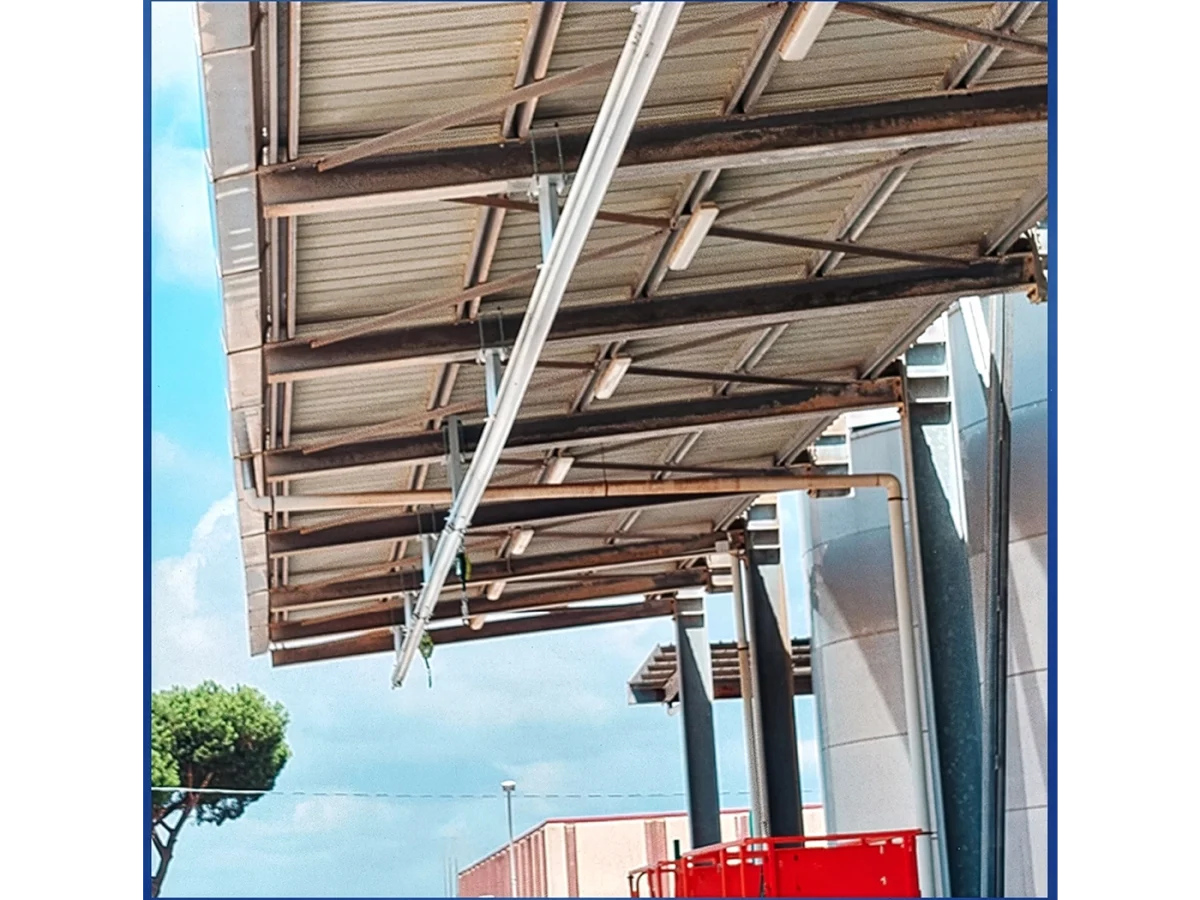
SPIDER can provide custom design, turnkey supply, installation, and maintenance of fall protection systems such as lifelines or fall arrest systems for loading bays.


In Italy, Legislative Decree No. 81 of 2008, known as “Consolidated Law on Occupational Safety“, aims to establish uniform protection standards for workers across the country. This applies to all sectors, including loading and unloading operations at loading bays.
Loading and unloading bays for tankers and articulated vehicles exceed 4 meters in height, representing a serious fall hazard for operators during loading and unloading operations. For this reason, it is essential to implement adequate fall prevention and protection measures against falls from height in compliance with current regulations.
SPIDER can provide custom design, turnkey supply, installation, and maintenance of fall protection systems such as lifelines or fall arrest systems for loading bays.
Chiedi maggiori informazioni
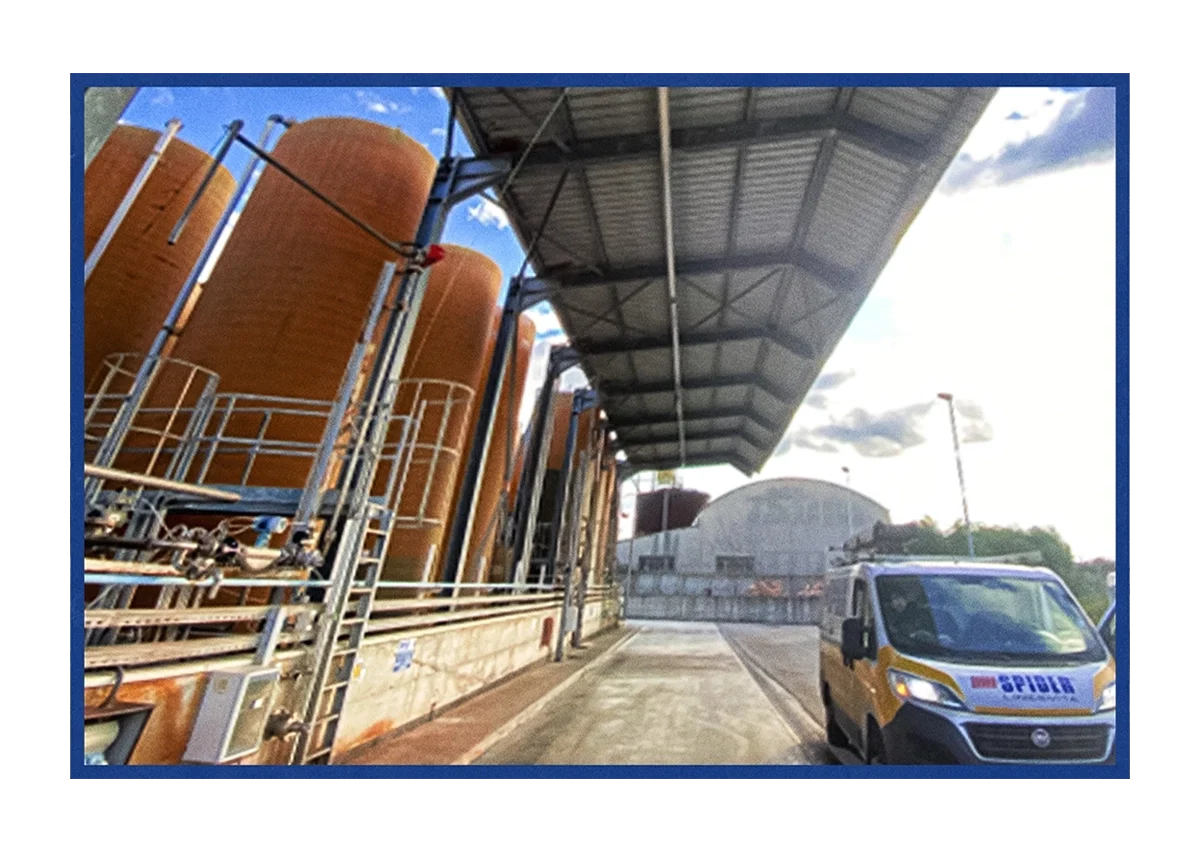
In the realm of high-altitude work, reliability and safety are paramount. For this reason, choosing to rely on specialists in the field can represent a tremendous advantage for your company.
When it comes to working at heights, the technical complexity and associated risks are high. Regulatory requirements, risk management, staff training, and the selection and maintenance of equipment – these are all aspects that require specific and up-to-date expertise.
By entrusting specialists, you will not only ensure compliance with current regulations, but you will also benefit from the experience and technical skills that these professionals bring. They are capable of identifying and mitigating risks, properly training your staff, and ensuring that the equipment is always cutting-edge and maintained in optimal conditions.
From a commercial standpoint, investing in safety for high-altitude work is not just a regulatory obligation but a strategic choice. A safe work environment can enhance productivity, reduce costs related to occupational injuries and illnesses, and strengthen your company’s reputation.
In summary, choosing a ‘turnkey’ solution provided by professionals specialized in high-altitude work allows you to focus on your core business, while a team of professionals ensures a safe and regulatory-compliant work environment. It’s an investment that pays off in terms of peace of mind, efficiency, and corporate reputation.
Falls: This is the most obvious and potentially the most dangerous risk. Falls can occur due to slippery surfaces, unprotected edges, or simply loss of balance.
Falling Objects: Objects falling from heights can cause serious injuries to workers below.
Strain Injuries: Lifting and moving heavy objects at height can cause musculoskeletal injuries.
Exposure to the Elements: Working outdoors can expose workers to extreme weather conditions.
Equipment-Related Risks: The use of lifting equipment or other heavy machinery can pose additional risks.
Chemical Hazards: In the case of tankers, there may be risks associated with exposure to hazardous chemicals.
Oxygen Deficiency Risks: In the case of containers, there may be a risk of low-oxygen environments.

Our team of experts will ensure that all measurements, information, and details are accurately collected.
This allows us to take all necessary precautions for a design that is fully functional for workers’ activities.

The stages of designing a fall protection system, such as rigid rail lifelines (Type D), are: defining the method of access at height.
Preparation of the anchoring devices/systems to be installed and the method of securing the anchoring devices to the structure.

Our operational staff responsible for installation is highly qualified and capable of performing installation on any type of structure.

The main goal of the SPIDER team is to provide a true turnkey service for every commissioned job.
We issue all the necessary documentation in accordance with current regulations.
Working at height regulations are a critical topic, especially in Italy and Europe, encompassing a set of rules designed to ensure worker safety. These regulations may seem complex, but don’t worry, we’re here to help you understand them better!
First and foremost, it’s important to emphasize that these rules have been created with one goal in mind: your safety. When we talk about working at height, we refer to any activity that involves accessing the loading area of a road or rail vehicle or a container, or work done above a tank truck.
These regulations include requirements for training, safety equipment, and standard operating procedures. For instance, you might need to complete a specific training course or use personal protective equipment (PPE) such as safety belts or harnesses.
But how do these regulations apply in practice? And how can they affect your day-to-day work? This is where our team of experts comes in. We’re here to help you navigate through the maze of laws and rules, to ensure that you can work safely and in compliance.
If you’re interested in learning more, or need assistance understanding how these regulations apply to your specific industry or situation, don’t hesitate to contact us. We can provide you with tailored advice, answer your questions, and guide you through the process step by step.
Legislative Decree 81/08 – Annex XXI
Regional Regulations on safety standards for working at height
UNI 11900:2023 – Unregulated professional activities – Installer of anchoring systems – Knowledge, skills, autonomy, and responsibility requirements
UNI 11560:2022 – Permanent anchoring systems on roofs – Guide for identification, configuration, installation, use, and maintenance
UNI 11578:2015 – Anchoring devices intended for permanent installation – Requirements and test methods
UNI EN 795/2012 – Individual protection devices against falls – Anchoring devices. Fixed Anchors, Movable Point Anchors, Flexible Line Anchors, Rigid Line Anchors, Ballasted Point Anchors
Directive 2001/45/EC
Directive 89/656/EEC (use of Personal Protective Equipment)
It is important to note that these EU Directives are implemented in member states through national legislation.
Remember, specific regulations may vary from one country to another within the EU, so it is important to consult your local laws.
Depicted in this image is the imposing figure of a tanker, ready to become the stage for the operator on duty. The vehicle’s position has been carefully calibrated beneath the attachment point, ensuring safe and reliable access for the operator, who is preparing to climb onto the vehicle using the designated access points.
The donning of Personal Protective Equipment (PPE), a crucial phase of the process, is carried out with the utmost care and precision. The operator, following the manuals’ instructions meticulously, performs a thorough series of checks before beginning the ascent.
The image clearly illustrates the freedom of movement the operator can utilize once in the working position. The shuttle, in this case, moves parallel to the operator, allowing a wide range of movements and operations. This is just one example of the systems used in the complex loading and unloading operations. A ballet of precision and safety, where every movement is calculated and every action is the result of careful preparation. An art, ultimately, where safety and efficiency go hand in hand.


Working at height, which includes activities on loading bays, tank trucks, containers, and trucks, may seem a daunting task. However, it is a daily reality for many sectors. And while the challenges are undeniable, the true danger lies in what is not seen: the hidden risks and potential legal and financial costs that can stem from a workplace accident. Think about the possibility of collisions with low ceilings or overhead structures. You might think wearing a helmet is enough, but it does not eliminate the risk. What if a worker slips on a wet or icy surface? Or trips over poorly placed cables or ropes?
Every accident can lead to costly legal actions, a loss of productivity, and ultimately, a damage to your company’s reputation. But most importantly, it can endanger the lives of your workers. Then there are the less obvious dangers, such as electrocution from suspended cables or the severe consequences of suspension trauma, when a worker remains hanging and immobile, risking loss of consciousness and, without timely intervention, even life.
And what about the pendulum effect, which can cause a worker to collide with the ground or other obstacles, or injuries caused by falling loads from above? These are not hypothetical scenarios but real risks that every enterprise conducting work at height must face. And the question you should ask yourself is: are you truly prepared? Deepening the understanding of the risks and investing in preventive measures is not just an ethical choice but also a wise economic decision. A safe work environment reduces the costs related to accidents and occupational illnesses, increases productivity, and enhances your company’s reputation.
Contact us


