- Chat Support
- FAQ
- Registrati
- Login
Spider Linee Vita is among the best partners for safety and offers market solutions in the field of confined spaces, ensuring the quality of equipment, training, and operator safety.
Worker health protection is achieved through proper training and instruction, and the use of PPE that protects them from both accidental falls and harmful agents. On this page, we focus on work in confined spaces and the mandatory PPE in these environments:
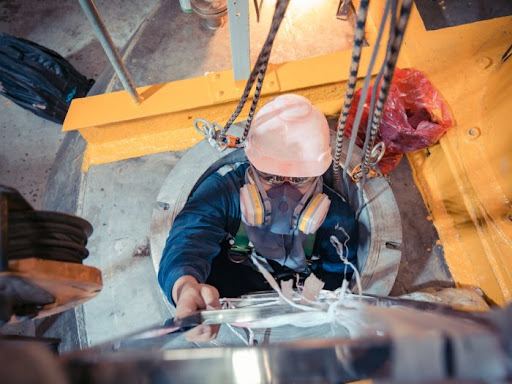
For all situations where an operator must perform work in tight or difficult-to-access spaces, where exposure to risk is high, Spider Linee Vita provides PPE that ensures operator safety. Let’s start by defining confined spaces and the risks associated with them.
When we talk about confined spaces, we mean work environments where the risk of death or serious injury is very high due to the presence of hazardous substances or conditions.
A “confined space” refers to a fully or partially enclosed place/environment that was not designed or built to be permanently occupied by people, nor intended for such use, but which can be temporarily occupied to carry out work interventions such as inspection, maintenance, repair, cleaning, or installation of technological devices. These spaces are characterized by limited access openings and poor natural ventilation, where the risk of death or serious injury is very high due to the presence of hazardous substances, chemicals, or dangerous conditions (e.g., oxygen deficiency).
See Legislative Decree 81/08 and DPR 177/11.
Concrete examples: confined spaces can include tanks, silos, reactors, closed drainage systems, sewer networks, and generally areas where ventilation is absent or insufficient.
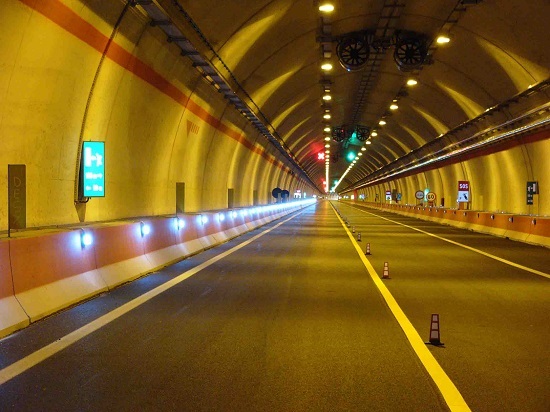
The main risks associated with work in confined spaces are primarily of three types:
Need advice on designing PPE for confined spaces?
Contact us
These spaces present very high risks due to the possible presence of toxic substances and gases, lack of oxygen, and fall hazards.
Spider Linee Vita, chosen by hundreds of companies over the years for the design, installation, and supply of lifelines, fall protection systems, also provides PPE for work in confined spaces.
Spider Linee Vita offers equipment for confined spaces to ensure operator safety. Our solutions also allow for quick installation and ease of use, optimizing ergonomics.
We handle the design, installation, and maintenance of the fall protection system to ensure optimal functionality at all times. Its primary function is to prevent falls from height, which can be fatal in worst-case scenarios.
Remember that fall protection systems and PPE must be selected based on the work environment and the tasks to be performed.
PPE commonly used for confined spaces includes:
On the right, an example of a mini-crane, also used for confined spaces.
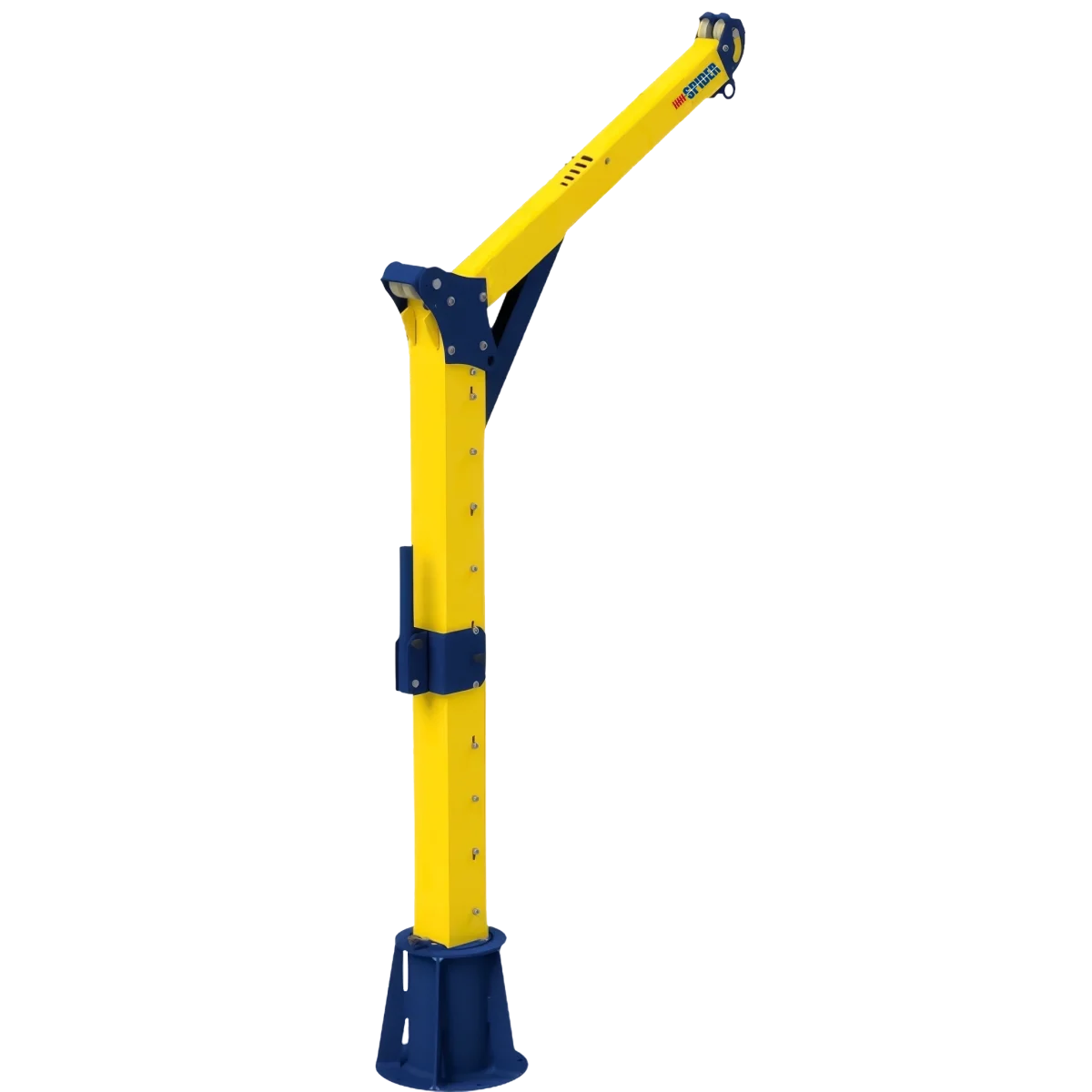
The design of a fall protection system is essential to determine the most suitable solutions for the environment where it will be installed. Spider guarantees the use of certified products and handles the provision of all project and executive documentation (declaration of proper installation, user and maintenance manual), duly signed. To find out which equipment is best for your needs, contact us!
To facilitate rescue operations in a confined space, in addition to an appropriate anchorage device, the correct connection and rescue systems must also be provided.
These PPE devices comply with two main standards: EN360:2003 for “Personal protective equipment against falls – Retractable fall arresters” and EN1496:2007 for “Personal protective equipment against falls – Rescue lifting devices.” Products on the market may comply with one, the other, or both standards. Which to choose? The deciding factor is the method of access to the confined space:
Need to design and install a fall protection system for confined spaces?


