- Chat Support
- FAQ
- Registrati
- Login
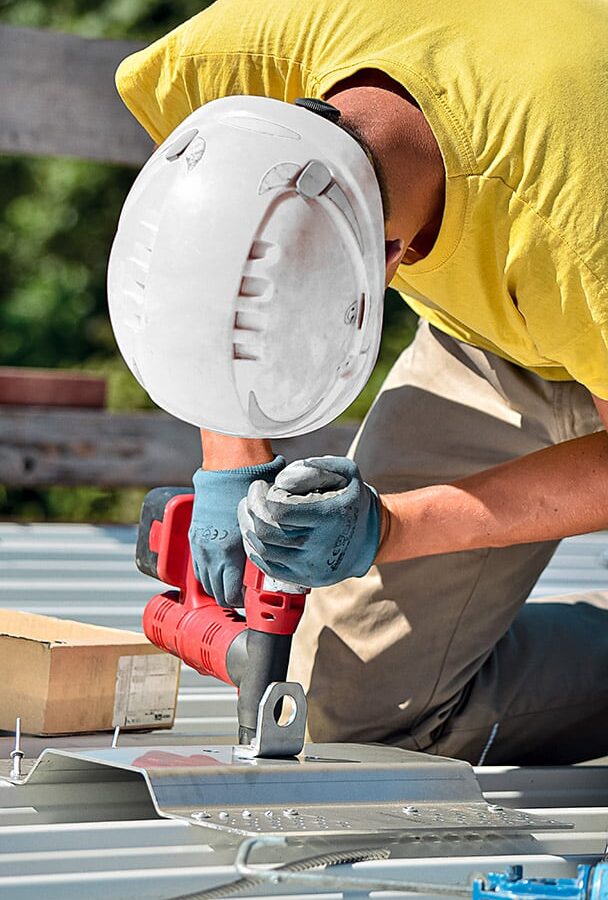
The installation of permanent fall protection systems is a highly specialized technical activity that must ensure full consistency between the design, the device, and the supporting structure.
Installation must comply with the principles set out in UNI 11560:2022, which governs the criteria for installing anchorage systems on roofs, and UNI 11900:2023, which defines the competencies and responsibilities of the qualified installer.
The objective of installation is to ensure that the fall protection system, once installed, meets the design performance requirements in terms of strength, stiffness, functionality, and durability, and that it is safe for users.
The standard requires that installation:
is carried out strictly in accordance with the executive design, without unauthorized modifications by the designer;
complies with the manufacturer’s specifications for the fall protection system;
ensures correct mechanical connection between the device and the supporting structure, based on the structural verifications performed (NTC and Eurocodes);
includes inspection of materials, fixings, and substrate conditions prior to installation;
provides for an installation inspection certifying compliance of the installed system with the design requirements.
UNI 11560:2022 emphasizes that installation is an integral part of the design process: a correctly designed system may become ineffective if installed improperly.

Standard UNI 11900:2023 defines the competencies of anchorage system installers, identifying three professional levels:
A fall protection system installed by unqualified personnel may compromise safety and render the entire system non-compliant.
Installation must ensure:
The installer verifies:
Issuing the declaration: